How WPOS matched a premium studio site without copying a pixel of it
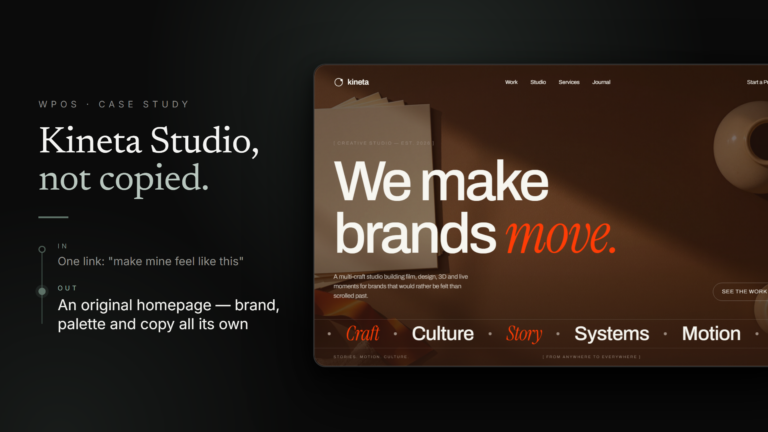
A creative-studio homepage built from a single reference link — same premium feel, same motion language, none of the reference’s photos, words or branding. WPOS sampled the real site instead of guessing at it, and found that the black everyone sees is actually a warm espresso brown.
The brief said don’t flatten the interactive sections. It didn’t.
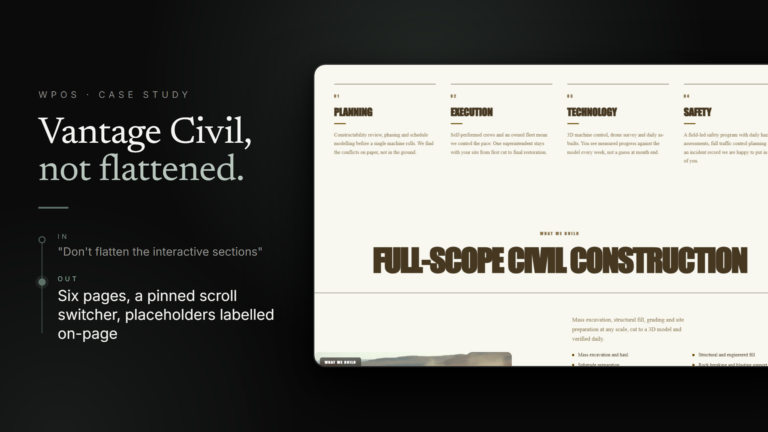
A civil-engineering reference site, twenty required elements, and one clause most AI builders would quietly ignore: do not replicate the interactive sections with basic static ones. WPOS built six pages around a scroll-pinned services switcher — and labelled every invented figure as a placeholder, on the page, in print.
The build that stopped and asked one question
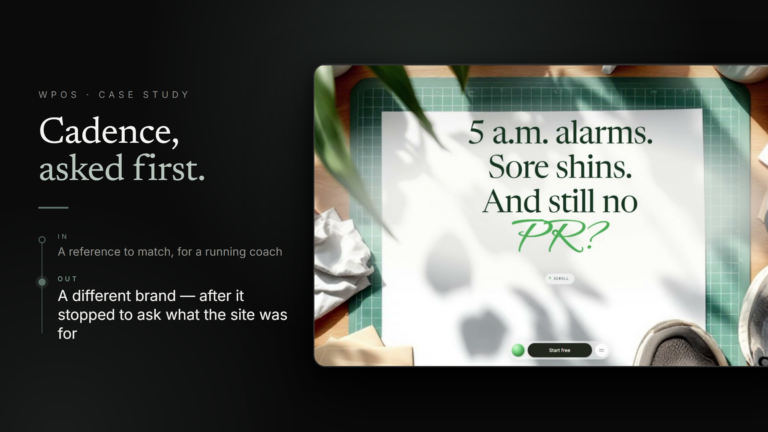
Given a reference site and told to match its design, layout, animation and scrolling experience, WPOS studied it down to the hex codes — then stopped before building. It could drive every design decision itself, but not what the site was for.
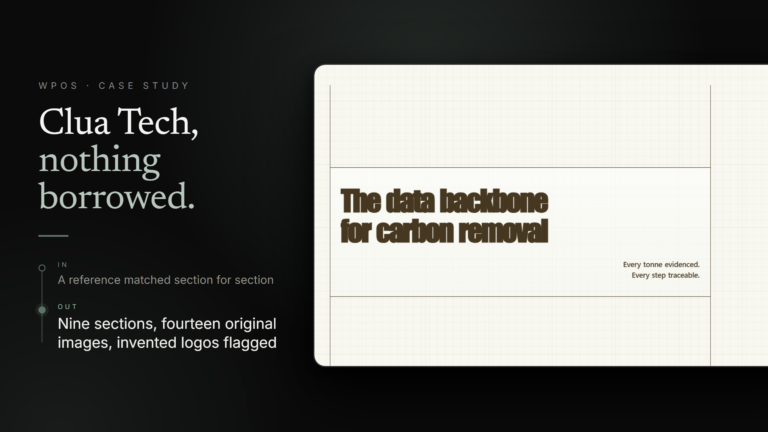
A reference matched section for section, with nothing borrowed but the shape
Get as visually close to the reference as possible, don’t simplify the experience — and don’t copy a single word, image or logo. WPOS built its own theme, generated fourteen original images and placed nine sections, then flagged which parts of its own output the client couldn’t legitimately claim.
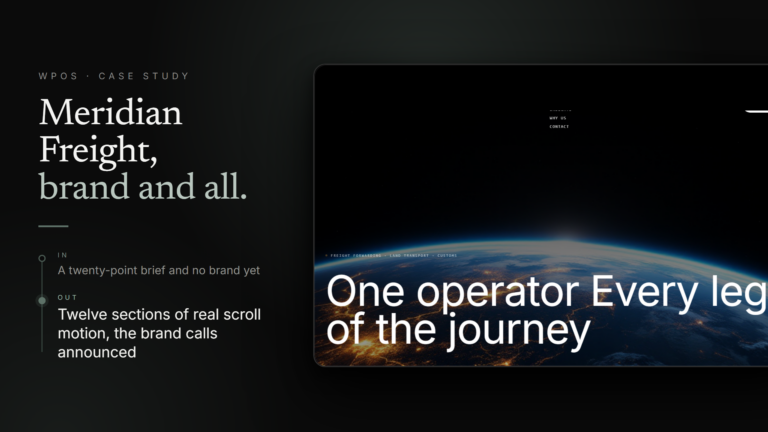
A twenty-point brief, an invented brand, and twelve sections of real scroll motion
Given a logistics reference and twenty requirements with no brand supplied, WPOS made the brand calls itself and said so: name, wordmark, tagline, palette, type. Then it caught three real bugs, including WordPress silently escaping an ampersand and killing the entire motion layer.
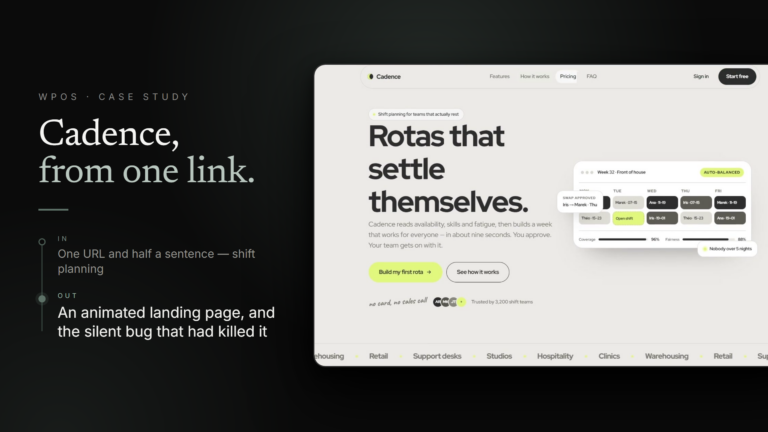
One link, one sentence, one animated landing page
The entire brief was a URL and a half-finished line of text. WPOS worked out the reference’s motion was CSS rather than WebGL, pulled the design tokens straight off the page, and built an original animated landing page — then traced a silent WordPress bug that its own server-side test had reported as a pass.
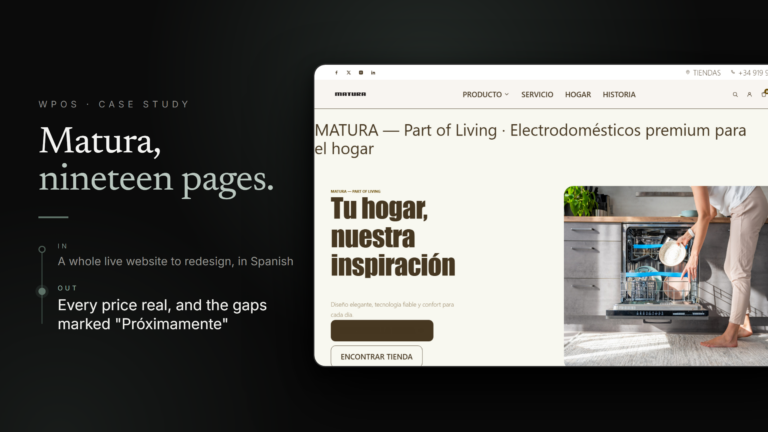
A whole website redesigned in Spanish — nineteen pages, every price real
Not a homepage refresh. WPOS rebuilt a live Spanish appliance brand’s full site — catalogue, product data, support, legal, history — in Spanish, with a theme derived from the brand’s own DNA. Where the source had no products or no prices, it built Próximamente and Consultar instead of inventing SKUs.
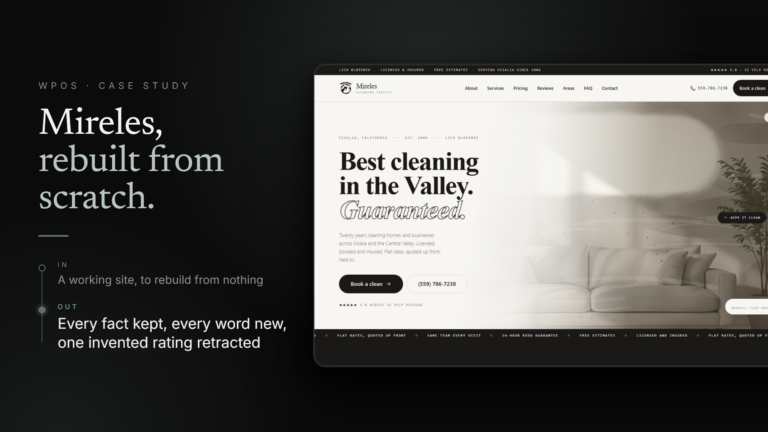
A working site, rebuilt from scratch — every fact kept, every word new
The existing site wasn’t broken. The brief was to rebuild it anyway, using the original only as business context — never as a design template. WPOS carried the logo, licence, pricing, hours and all five reviews across verbatim, rewrote every service description, then caught and retracted a star rating it had invented.
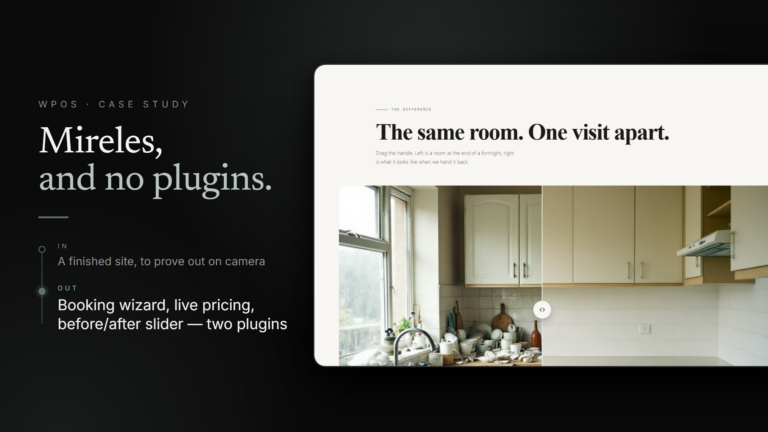
A booking wizard, a live price calculator and a before/after slider — and no plugins
A finished site for a twenty-year-old cleaning business, with a seven-step booking wizard where the price builds on screen as you answer. Then the film opens the WordPress Plugins page. Two items. No booking plugin, no form plugin, no slider, no calculator, no page builder — on WordPress’s own default theme.
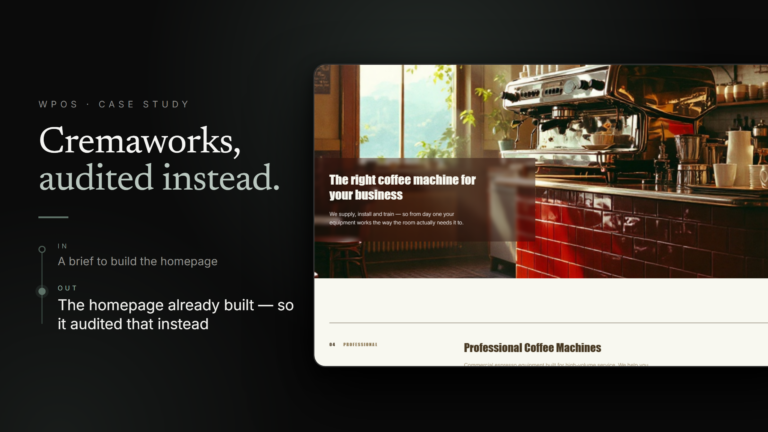
Asked to build a homepage, it found the homepage already built — and audited it instead
WPOS opened a reference-match brief and discovered the site already carried the finished build from an earlier session it no longer had context for. Rather than rebuild and risk wrecking working output, it audited all sixteen sections, measured the motion engine live, raised a bug — then checked properly and took the bug back.
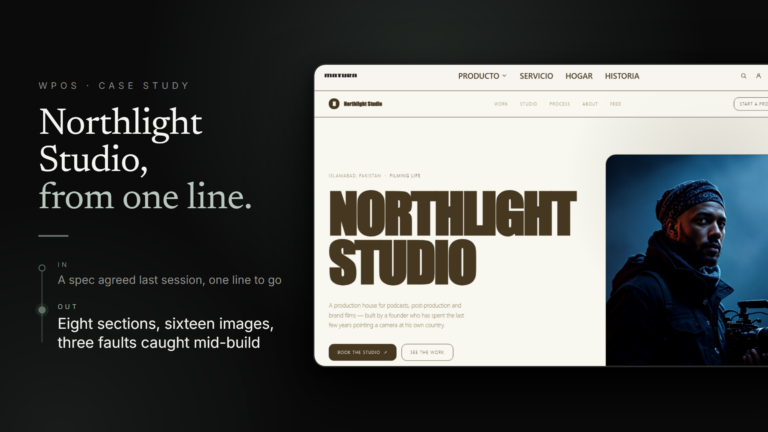
A spec agreed last session, built from a one-line go-ahead
The plan was already approved, so the brief was a single sentence. WPOS picked it up with full context, checked its existing widget library for anything reusable, decided nothing scored high enough, and built all eight sections new — plus the theme and sixteen generated images — catching three platform faults on the way.
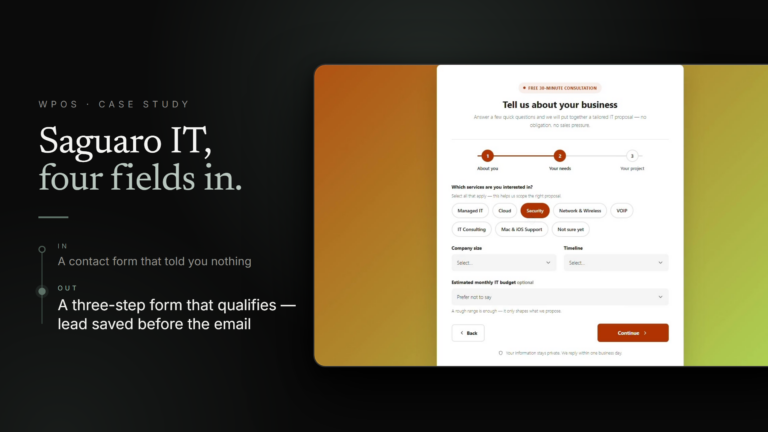
Four fields that told you nothing, rebuilt into a form that qualifies
A managed IT company’s consultation page asked for a name, an email, a phone number and a message. WPOS rebuilt it as a three-step qualifying form and built the backend behind it: every submission is stored as a lead record before the notification email is even attempted, so a mail failure can never lose a lead.
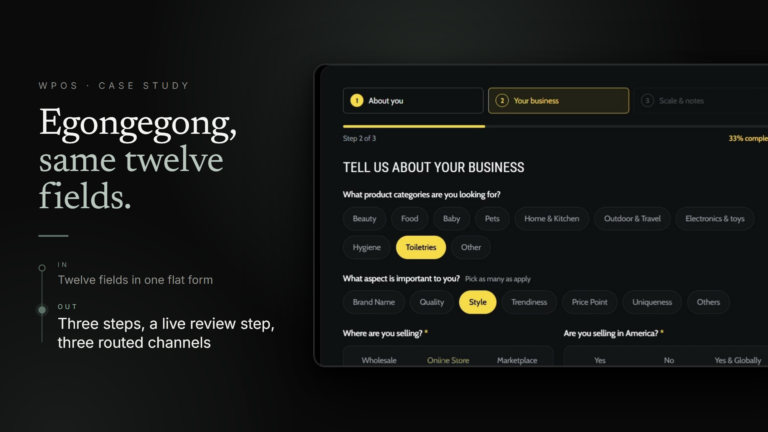
Same twelve fields. Completely different experience.
A wholesale sourcing brand’s contact page ran a three-step plugin form — twelve fields, six required, and not much else. WPOS rebuilt the identical twelve fields as a real contact experience: richer controls, working validation, three routed channels, and a review step that shows people their own answers before they send.
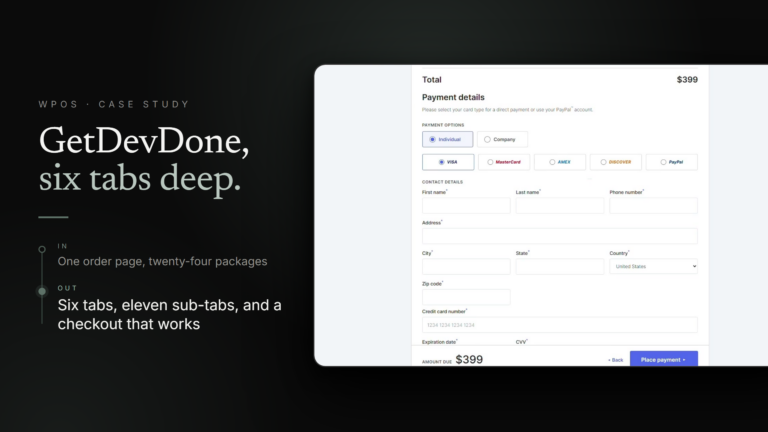
Twenty-four packages, six tabs, and forms that finally make sense
A real agency order page with six service tabs, twenty-four packages and a long undifferentiated form behind every one. WPOS rebuilt the whole system — grouped fieldsets, Optional chips instead of asterisk noise, a sticky running total and a working checkout — then verified its own pricing against the source across eight pricing models.